
Join Us in Niagara Falls, New York
The true success of the conference will not rest solely on individual presentations but on the meaningful exchanges and conversations they inspire. All registered participants will be integral to this ongoing dialogue. In addition to thought-provoking panel discussions and presentations, the conference will feature networking opportunities, interactive workshops, and a public lecture designed to foster collaboration and active engagement.
We warmly invite you to join us in Niagara Falls, New York, for this landmark international gathering—a forum for collaboration, research sharing, and collective action toward workplaces free of mobbing and psychological harm.
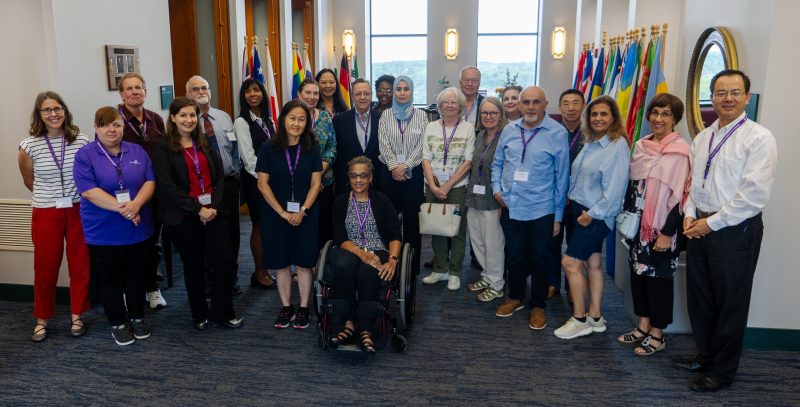
2026 Niagara Conference on Workplace Mobbing
 Theme: From Awareness to Action: Building Healthy and Respectful Workplaces
Dates: July 20–22, 2026
Following the success of the 2024 and 2025 Niagara Conferences on Workplace Mobbing, the 2026 conference will continue to bring together scholars, practitioners, clinicians, and policymakers from around the world to advance research, dialogue, and cooperation on workplace mobbing.
This year’s theme emphasizes the need to continue raising public awareness of workplace mobbing, moving forward toward proactive strategies for prevention, intervention, healing, and organizational change. The conference will feature keynote lectures, individual paper presentation sessions, poster presentation sessions, panel discussions, and roundtable discussions focusing on how we can build workplaces rooted in dignity, justice, and compassion.
We invite proposals that address, but are not limited to, the following areas:
- Leadership, power, and responsibility in workplace mobbing
- Cross-cultural and comparative research on mobbing
- Legal, ethical, and policy frameworks
- Trauma, healing, recovery, and restorative practices
- Mobbing in digital and hybrid work environments
- Interventions, organizational change, and preventive strategies
Due to space limitations, the number of in-person participants is limited to 100. Register as soon as possible to reserve your place by completing the reservation form and sending it to the Conference Registrar. All participants (either in person or virtually) must register for conference.
Conference Language
All presentations, discussions, and conference materials will be in English.
Registration Information:
Registration fee is in US dollars. Payment should be made in US dollars.
- In-person participants: $225, include:
- Videos of in-person presentations, along with Q&A and discussion, may be posted on YouTube.
- Complementary lunch, coffee, fruit and snacks on July 20 and 21.
- Complimentary sit-down dinner on July 21.
- Complimentary tour of Niagara Falls attractions on Wednesday, July 22.
- Virtual participants: $100
- Videos of virtual presentations, along with Q&A and discussion, may be posted on YouTube.
- Access to all presentations, including opportunities to ask questions, provide feedback, and join discussions.
Presentation Formats and Submission Requirements
(All presentations are in English)
We invite submissions from researchers, practitioners, policymakers, and advocates from a variety of disciplines. Proposals for papers, panels, and workshops may include case studies, quantitative or qualitative analyses, or theoretical perspectives contributions.
Individual Paper Presentations
For researchers presenting original studies, theoretical work, or case analyses.
Submission must include:
- Title of paper (maximum 15 words)
- Abstract (150–250 words) summarizing purpose, methods, findings, and implications
- 3–5 keywords
- Presenter’s name, affiliation, and contact information
Presentation time: 15–20 minutes, plus Q&A.
Panel Discussions
For groups (3–5 speakers) presenting multiple perspectives on a shared theme.
Submission (by panel organizer) must include:
- Panel title (maximum 15 words)
- Panel abstract (200–300 words) identifying the central question or theme, explaining the purpose, relevance, and coherence of the panel
- List of participants (moderator’s and 3-5 panelists’ names, affiliations and emails)
- 100–150 words abstract from each panelist (Each panelist should submit a short summary of their planned contribution or perspective).
- Optional: brief format description (discussion sequence or guiding questions or audience interaction plans)
Session time: 60–90 minutes total.
Roundtable Discussions
For interactive, conversational sessions exploring emerging topics, opportunities for joint projects, or shared experiences. The purpose is to encourage open, informal exchange of ideas among participants with shared interests.
Submission (by organizer or facilitator) must include:
- Roundtable title (maximum 15 words)
- Roundtable abstract (150–250 words) describing purpose, key questions, and goals the topic and its significance, the guiding questions or themes for discussion, the intended outcomes (e.g., networking, collaboration, research ideas).
- Facilitator’s name, affiliation, and contact information
- Names of known participants (if available)
Session time: 60–75 minutes.
Submission Instructions
Please submit your proposal through the online submission portal. Each submission should be in English, in Word format, and include full contact information for the lead author or organizer.
Conference presenters are invited to submit their papers for publication in the Journal of Workplace Mobbing.
For Non-Presenting Participants
You are most welcome to join the conference even if you are not presenting. Many participants attend to learn, share experiences, heal, and engage in meaningful dialogue with others working to prevent workplace mobbing and related forms of psychological harm. Please let us know if you would like to be on the formal program in some other capacity, like session chair or discussant.
What to Expect:
- Inspiring and informed keynote speakers from around the world
- Panel and roundtable discussions on workplace dignity, leadership, ethics, legal and extra-legal strategies, and recovery
- Opportunities to network with researchers, practitioners, and organizational leaders
- Sessions highlighting new approaches to workplace well-being and justice
Important Dates
No deadline for non-presenting participants
- Proposal submission deadline: May 15, 2026
- Notification of acceptance: May 30, 2026
- Presenter registration deadline: May 15, 2026
- Participant registration deadline: No Deadline
- Conference dates: July 20–22, 2026
About The Niagara Conference on Workplace Mobbing
This conference initiates an effort to establish workplace mobbing as a comprehensive scholarly discipline and aims to raise public awareness of mobbing, and establish a connected and interactive community of mobbing scholars, labor experts, and committed attorneys, with the following objectives:
- A clear conceptualization of workplace mobbing: Identify clear empirical distinctions that set mobbing apart from the broader term of bullying, emphasizing the multidimensional structural framework of workplace mobbing.
- Mobbing as a scholarly subfield: Establish a disciplinary framework for mobbing, acknowledging its presence in psychology, sociology, administration, political science, economics, and many other disciplines.
- Scientific research on workplace mobbing: Creating a peer-reviewed journal: The Journal of Workplace Mobbing. Encourage theory and research on root causes and common consequences, profiles of mobbers, and implications for organizations.
- Policy impact: Identifying directions for future research and promising initiatives for policies aiming for generalizable findings and effective anti-mobbing policies and laws.
Co-Sponsors
Niagara University
Niagara University has graciously offered to host this inaugural event event alongside the nonprofit World Association for Research on Workplace Mobbing (WARWM).
Niagara UniversityThe Edwin Mellen Press
The Edwin Mellen PressSocial Medicine
Social MedicineJournal of Workplace Mobbing
The Journal of Workplace Mobbing, published by the World Association for Research on Workplace Mobbing (WARWM), has been added to the conference website as an important new resource for scholars and practitioners in the field. Notably, the inaugural issue of the journal features a selection of papers presented at the 2024 Niagara Conference on Workplace Mobbing, highlighting key research findings and insights shared during the event.
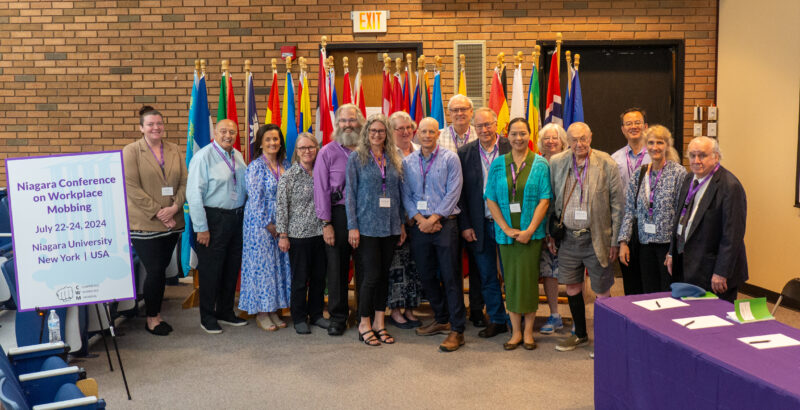
| Year | In-person | Virtual |
|---|---|---|
| 2024 | 26 | 50 |
| 2025 | 39 | 52 |



Contact
Please direct all questions and inquiries to the Conference Chair and Registrar, Dr. Qingli Meng, using form below.
Scientific Committee of Niagara Conference on Workplace Mobbing
- Chair and Registrar: Qingli Meng, Criminology, Niagara University
- Robert Ashford, Law, Syracuse University
- Walter S. DeKeseredy, Criminology, West Virginia University
- Joseph Donnermeyer, Criminology, Ohio State University
- Janie Harper, Anthropology, Independent Scholar
- Gorazd Meško, Criminology, University of Maribor, Slovenia
- Richard Peltz-Steele, Law, University of Massachusetts
- Florencia Peña Saint-Martin, Anthropologist, National School of Anthropology and History, Mexico
- Eve Seguin, Political and Social Science, University of Quebec in Montreal
- Peter Wylie, Socioeconomics, University of British Columbia, Okanagan
- Tim Ireland, Provost, Niagara University
- Kenneth Westhues, Sociology, University of Waterloo






One of the hardest things to learn about mobbing is that it can happen in any organization, even those that pride themselves on their ethical standards. It’s often invisible until it becomes unbearable for the victim.Kenneth Westhues Canadian Sociologist

Learning about mobbing is learning to see a group’s collective cruelty, not just the actions of individuals. It is a lesson in how the power of the majority can be used to crush the individual.René Girard (paraphrased) French Historian

Mobbing is a ‘psycho-terror'Heinz Leymann Swedish Academic

Every danger loses some of its terror once its causes are understood.Konrad Lorenz Austrian Zoologist, Ethologist, and Ornithologist